Foundation repair in Edmond starts with measuring the floor, not reading the cracks
Cracks tell you something happened. They do not tell you how much, in which direction, or whether it is still moving. An elevation survey does, and it is where every job here begins — including the ones that end with us telling you to leave it alone.
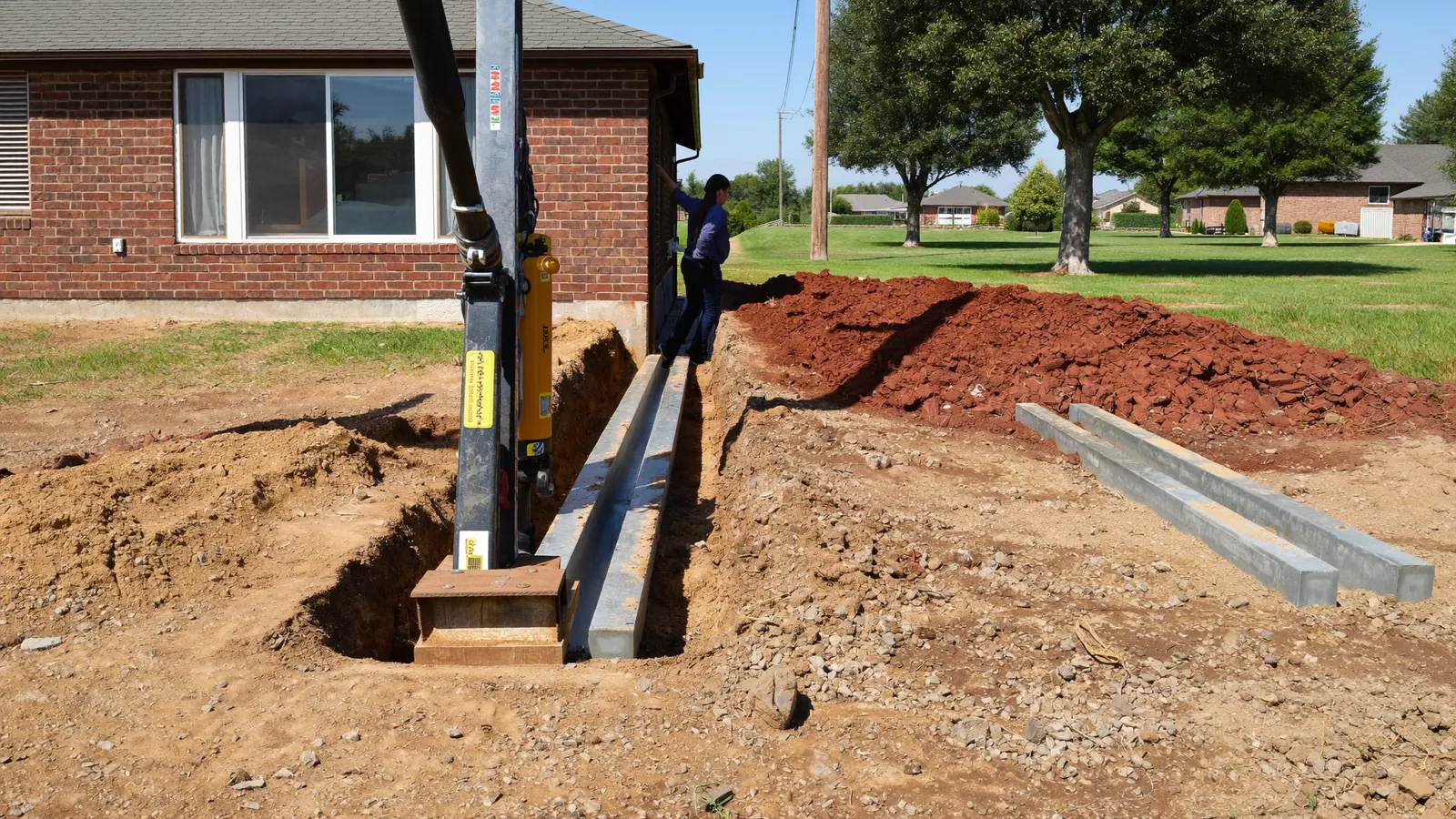
Foundation repair in central Oklahoma is a soil problem before it is a concrete problem. Edmond sits on Permian-age red beds: reddish-brown clay and shale with a high shrink-swell capacity, rich in montmorillonite and bentonite, the clay minerals that take up the most water. Soils with a plasticity index above roughly 40 are rated highly expansive, and the red clay here behaves accordingly. Give it a dry summer and it contracts and pulls back from your footing. Give it a wet May — the month averages around 4.6 inches against January's 0.8 — and it swells again. A foundation does not fail because the ground is wet or dry. It fails because the ground keeps changing, and almost never evenly around the whole perimeter.
That uneven part is what matters. If a house settled uniformly by an inch nobody would notice; brick would stay square, doors would still latch, floors would still feel flat. What causes damage is differential movement — one corner dropping while the rest stays put, or the center lifting while the edges hold. Two patterns recur here. Edge lift happens when the perimeter soil takes on water faster than the covered soil under the middle of the slab, which is common after heavy rain against a house with poor drainage. Center lift is the opposite: the soil under the slab stays damp because it is covered and shaded while the exposed perimeter dries out hard in August, so the middle of the floor rises relative to the edges. Each produces a different crack pattern and each calls for a different repair, which is exactly why a scope written from photographs is worthless.
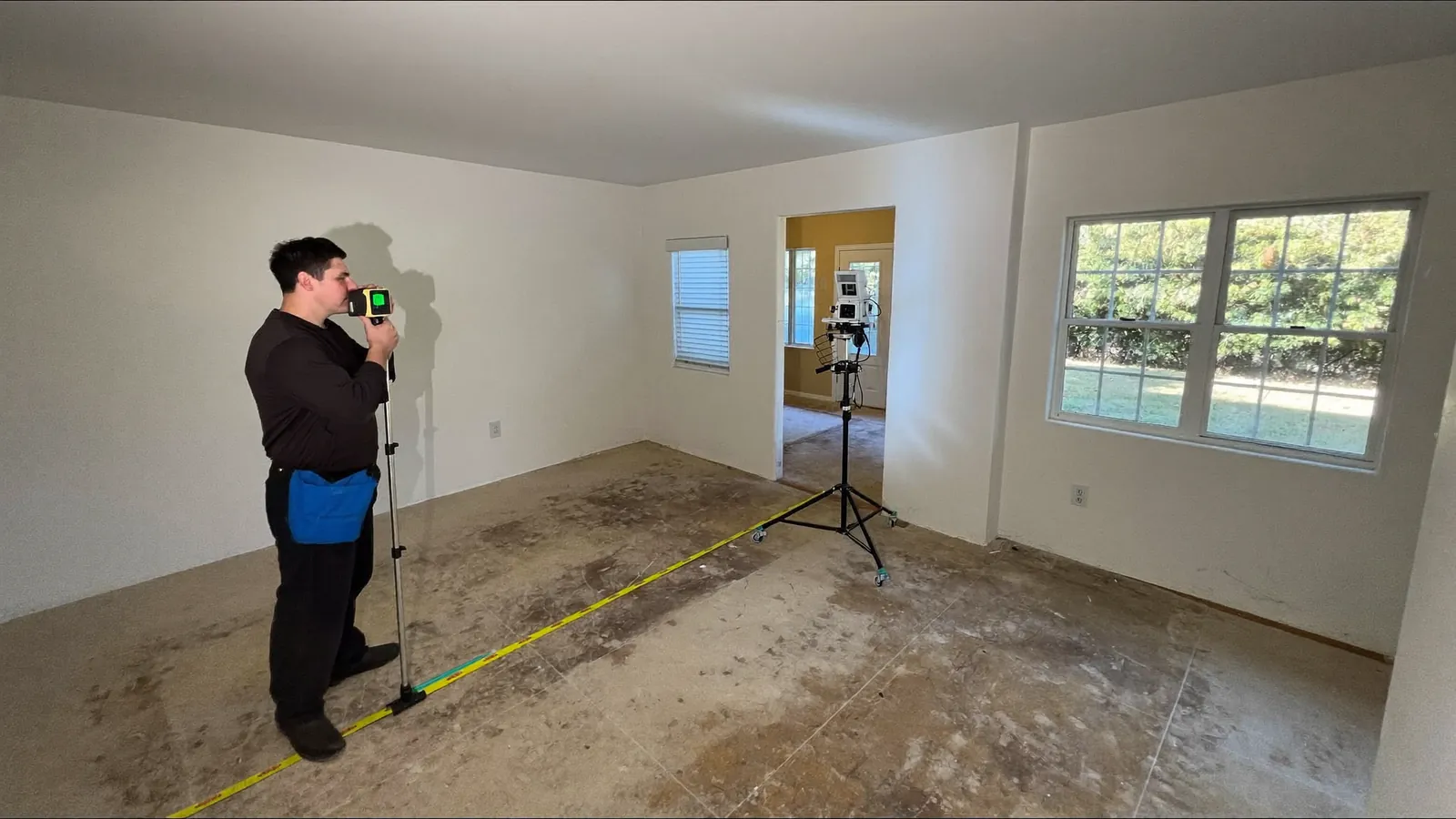
So we measure. A rotating laser and receiver taken room to room produces a contour of your floor expressed in inches of deviation from a datum, and that contour tells us the shape of the movement, where the low and high points sit, and how the pattern relates to the load-bearing walls. Then we look for causes that are not the soil at all: downspouts discharging at the wall, a lot that falls back toward the house, irrigation running against the foundation, mature trees drawing moisture from one side only, and under-slab plumbing. A supply or sewer leak beneath a slab keeps a single zone saturated year-round and will mimic classic soil settlement convincingly — and piering a house over a live leak means doing the work twice.
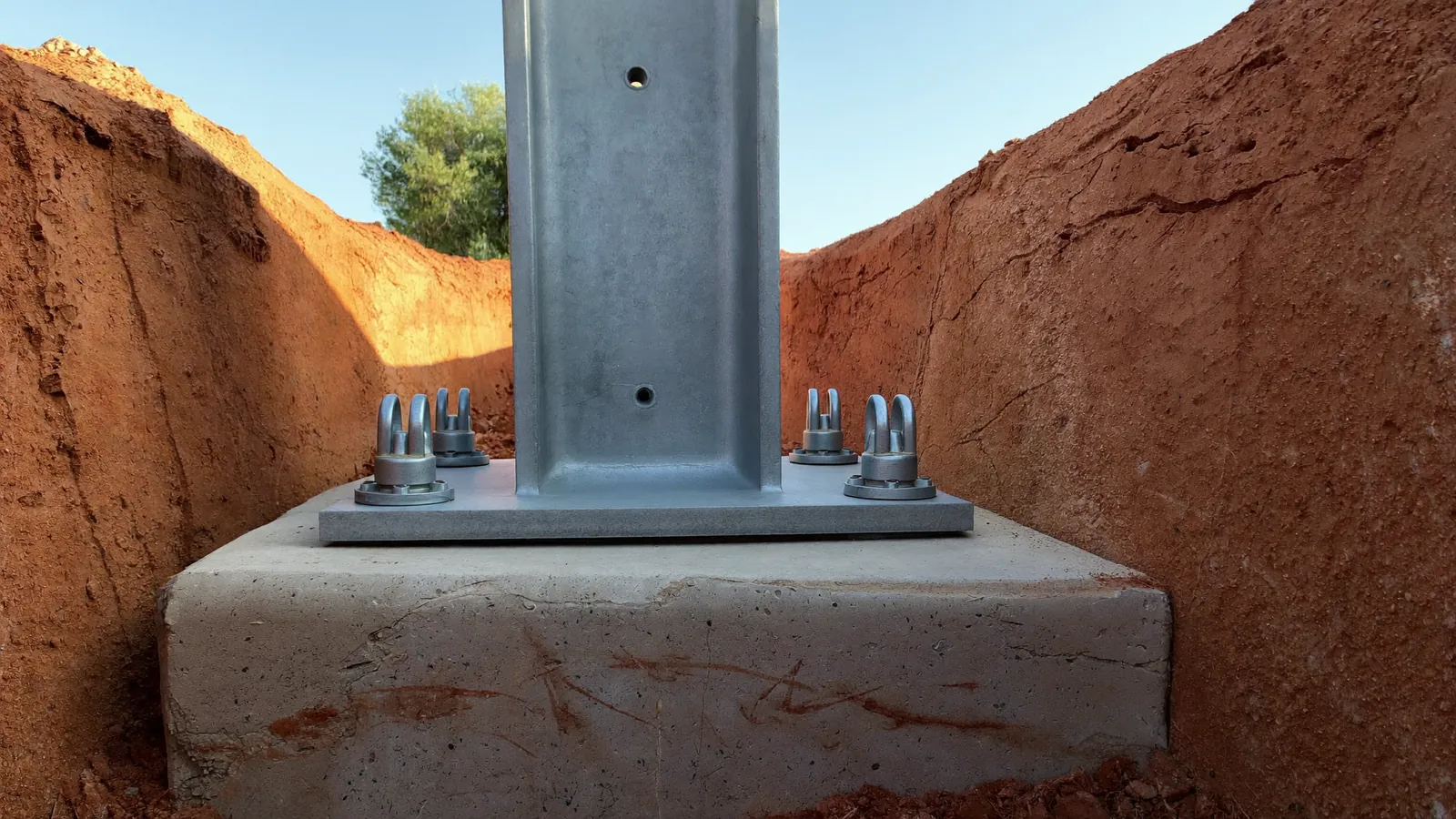
Only then does a repair get recommended. Sometimes that is piers, driven or torqued to load-bearing strata and bracketed to the footing to take the house off the clay. Sometimes it is crack repair and drainage correction, which on a house whose movement is being driven entirely by water management is both cheaper and more durable. Sometimes it is monitoring: fit telltales, take readings now, take them again in six months through a seasonal swing, and find out whether the house is actually going anywhere. Plenty of Edmond houses have cracks that opened years ago and have been stable ever since. We would rather say so than sell you a pier plan.
What's included
A measured elevation survey
Room-by-room floor readings on a rotating laser, written down and given to you, so the diagnosis starts from a contour rather than an opinion.
The cause investigated
Drainage, grading, irrigation, downspouts, trees and under-slab plumbing all checked, because a repair over a live water source fails twice.
Construction type identified
Conventional slab, post-tension slab or pier and beam — each fails differently and gets repaired differently, and we confirm which you have before scoping.
A written, itemized scope
Pier count and locations, method, depth or torque criteria, access, restoration and exclusions, in language you can hold against another proposal.
Permit handled
City of Edmond Building & Fire Code Services confirmed and the permit pulled before the crew is scheduled, with the paperwork left in your file.
Monitoring when that's the answer
Telltales and a repeat survey through a seasonal cycle, for houses where the honest recommendation is to watch rather than to dig.
Foundation repair cost in Edmond, OK
| Item | Typical range | Notes |
|---|---|---|
| Foundation inspection and elevation survey | Free – $350 | Free on most residential inspections in our area |
| Independent engineer's report | $350 – $900 | Their fee, not ours; we recommend it on large jobs |
| Crack repair, epoxy or polyurethane injection | $250 – $1,200 per crack | Around $550 is typical |
| Steel push pier, installed | $1,200 – $2,800 each | Driven to load-bearing strata |
| Helical pier, installed | $1,500 – $3,200 each | Torqued to a specified capacity |
| Typical whole-house pier job, 2,000 sq ft | $8,000 – $18,000 | Usually 6–12 piers |
| Oklahoma average across job types | $3,000 – $9,000 | Per published regional cost guides |
| City of Edmond permit | $100 – $500 | Varies by jurisdiction and scope |
These are 2026 budgeting bands drawn from published cost guides and what work of this kind runs in the OKC metro. Your figure comes after the elevation survey, itemized by pier, section or linear foot, and the written scope holds for 30 days.
Recent work
Questions we get about foundation repair
How do I know whether my cracks are serious?
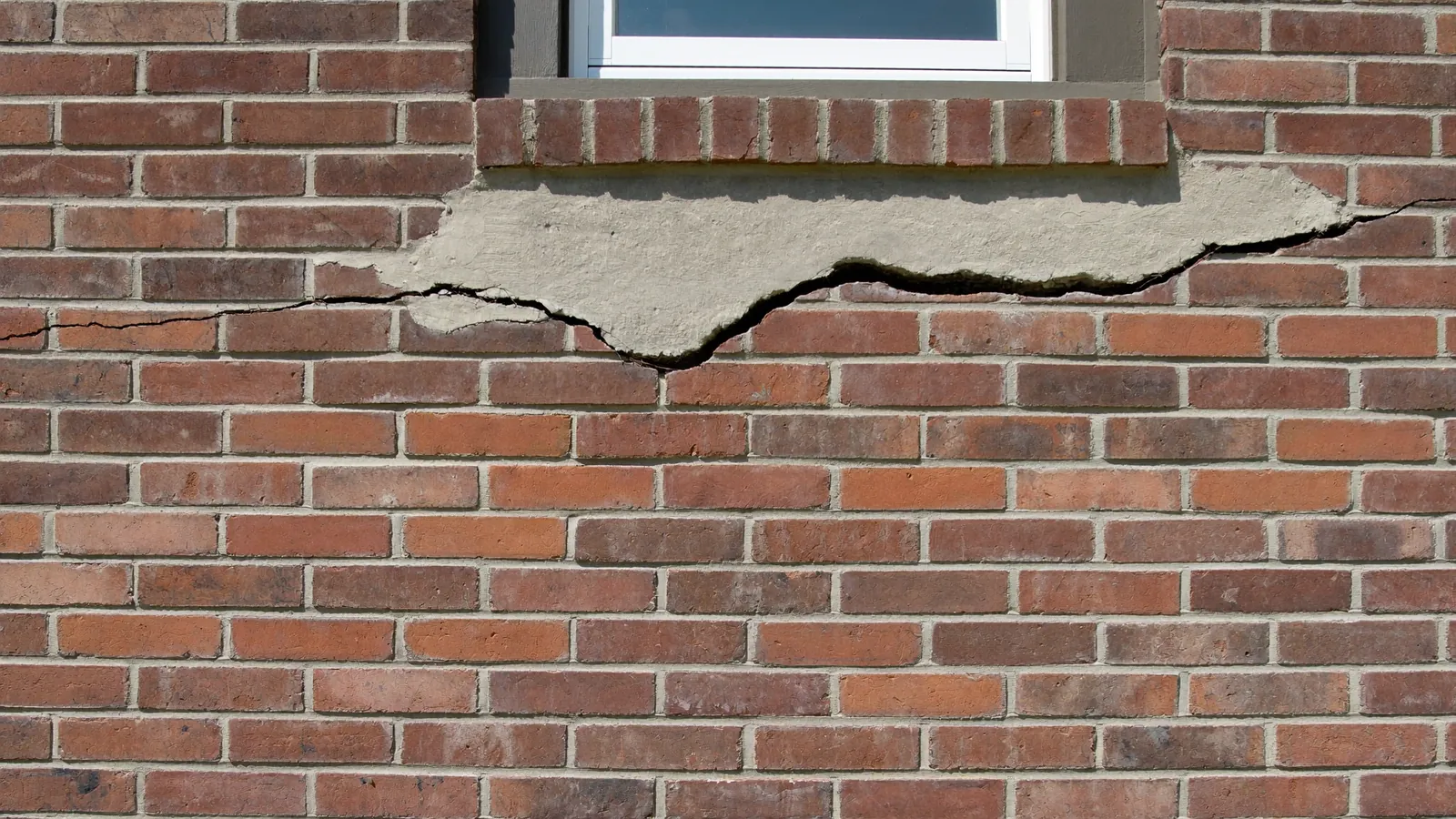
Pattern matters more than width. Stair-step cracking that climbs the mortar joints of brick veneer, diagonal cracks running from the corners of door and window openings, doors binding along one edge, floors sloping consistently in one direction and gaps opening between walls and trim tend to travel together, and together they indicate movement. A single hairline crack following a drywall joint, or fine cracking in a house built within the last two years, is usually shrinkage or initial settlement. Crack width alone misleads people constantly in both directions. The elevation survey resolves it, because it measures the floor instead of interpreting the finishes.
Does foundation movement ever stop on its own?
Sometimes, and it is worth knowing when. If movement was driven by something fixable — a leaking supply line, a downspout dumping at the wall, a lot graded back toward the house — then correcting that can stabilize the soil moisture and the house stops going anywhere, even though the existing cracks remain. That is why we check the water before we quote the piers. What does not self-correct is settlement into a soft or poorly compacted zone, or a footing that has lost bearing support. Those keep going until something carries the load.
Will repair close the cracks?
Partially, and we will not promise more. Lifting a settled section recovers some of the movement and many cracks narrow visibly as it goes. But materials take a set over years, brick and mortar do not return to their original geometry, and chasing the last fraction of an inch of lift risks doing fresh damage. We agree a realistic target before starting, and cosmetic repair — repointing, patching, redecorating — comes afterwards as separate work.
How long does the work take?
A crack injection job is usually a single day. A typical residential pier installation of six to twelve piers runs two to four days depending on access, how much of it is interior, and how the lift behaves. Interior piers under a slab need the floor opened and restored, which adds time. Drainage work is a day or two. We give you a schedule with the scope and tell you which days you will have machinery on the property.
Can I stay in the house?
Almost always, yes. Exterior pier work goes on outside, and apart from noise and a loss of your flower beds it barely touches daily life. Interior work means cutting and restoring slab sections in the affected rooms, so those rooms get cleared and are out of use for a few days. We sequence it room by room rather than opening the whole floor at once.
Do you offer a warranty?
Yes, and read what any warranty actually says — including ours. Pier systems normally carry a transferable warranty on the piers and the lift achieved at those points. What no honest warranty covers is the rest of the house moving somewhere a pier was never installed, because the clay under an unpiered section carries on behaving like clay. We hand you the terms in writing with the scope, before you sign, rather than after.