A retaining wall holds back soil. In Oklahoma it is also holding back water, and that is what breaks it
Block, timber and poured walls that have rotated out at the top, bulged or started to fail, assessed for cause and rebuilt with the drainage, backfill and reinforcement the original build left out.
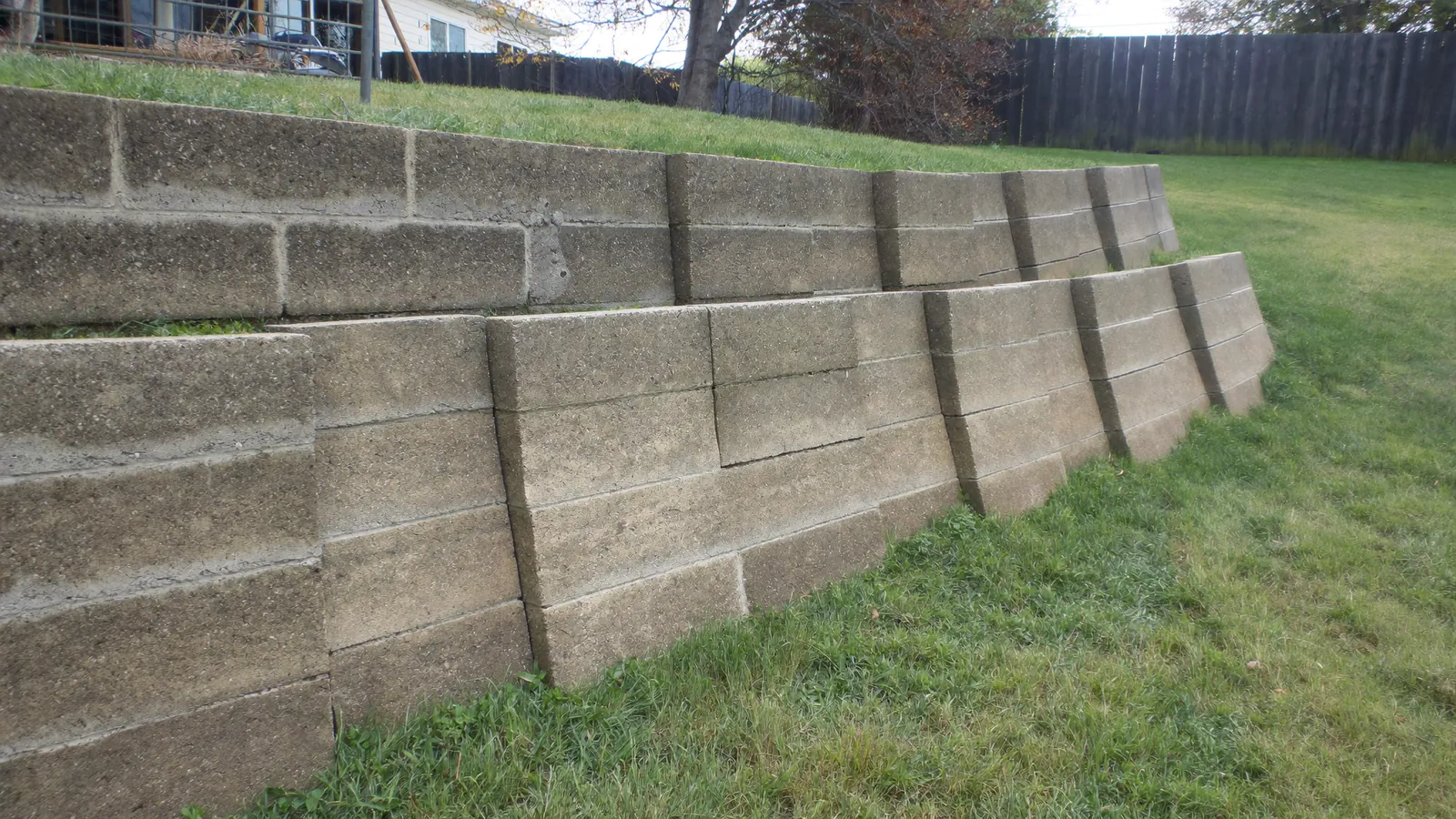
Retaining walls fail more often than any other structure on a residential property, and in expansive clay the reason is almost always the same: water behind the wall. A retaining wall is designed for lateral earth pressure. What it frequently gets instead is lateral earth pressure plus hydrostatic pressure, because clay backfill holds water rather than letting it drain, and saturated clay is both heavier and more aggressive than the dry soil the wall was sized for. Add the swelling that comes with wetting and the loads can go well beyond anything the original build anticipated.
The signs run in a sequence and it is worth knowing where you are in it. Leaning or rotation — the top moving outward while the base stays — is the classic and usually the first. Bulging in the middle of the run indicates pressure concentrated behind a section. Separation at the joints, where block units pull apart or timber courses gap. Cracking through poured concrete or masonry walls. Settlement at the base, where the footing itself has lost support. Soil washing out from behind or beneath the wall, which both undermines it and tells you where water is moving. And water staining or seepage through the face — a wall that weeps after rain is a wall with no working drainage, and it will be a wall with a problem in due course.
The causes are a short list too, and most are construction rather than bad luck. No drainage behind the wall: no gravel backfill, no drain pipe, no weep holes, so water accumulates with nowhere to go. Clay used as backfill instead of free-draining granular material, which is the cheap option at build time and the expensive one later. Inadequate footing or no footing. No geogrid in a segmental block wall above the height where reinforcement becomes necessary. Surcharge loading that was never allowed for — a drive, a patio, a parking area or a slope above the wall adding load from behind. And in older yards, timber that has simply rotted, which is a material lifespan issue rather than a design one.
Repair depends on how far it has gone. A wall that has moved slightly and has an identifiable drainage fault can often be stabilized in place: install drainage behind it, replace clay backfill with granular material, relieve the surcharge and correct the water reaching it. A wall that has rotated substantially generally needs rebuilding, because once units have moved out of alignment you cannot push them back without dismantling. Rebuilding is the opportunity to build it properly: proper footing, free-draining backfill, drain pipe to a real outlet, geogrid reinforcement at the right courses, and the right block for the height. We will tell you honestly which category your wall is in — and if it is close to the boundary, we will tell you that too, because a stabilization that buys three years is sometimes the right call and sometimes a waste of money.
What's included
Cause established, not just damage recorded
Drainage, backfill material, footing, reinforcement and surcharge assessed — because rebuilding without fixing the cause gives you a newer wall with the same future.
Drainage installed behind the wall
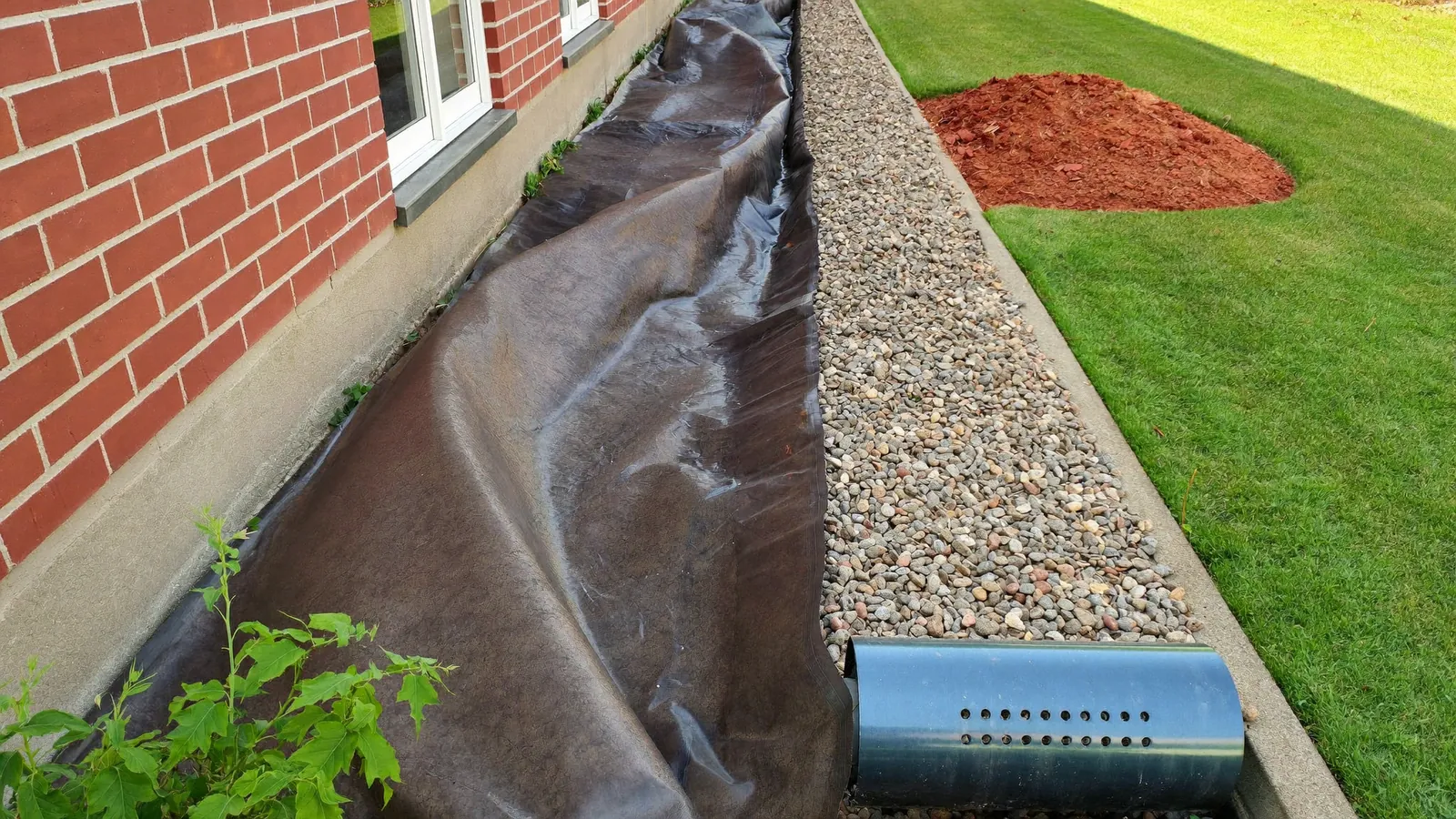
Gravel backfill, drain pipe and outlets so water leaves instead of accumulating against the structure.
Granular backfill in place of clay
Free-draining material where the original build used site clay, removing both the water retention and the swelling pressure.
Geogrid reinforcement at the right courses
Soil reinforcement in segmental walls above the height where the block alone cannot do it.
Footings corrected
Base support reinstated or rebuilt where settlement has started at the bottom of the wall.
Rebuild when stabilization would be false economy
A straight answer about which walls can be saved in place and which are past it.
Retaining wall repair cost in Edmond, OK
| Item | Typical range | Notes |
|---|---|---|
| Wall assessment | Free – $350 | Free with most inspections |
| Drainage retrofit behind existing wall | $40 – $110 per linear foot | Where the wall is salvageable |
| Segmental block wall rebuild | $35 – $90 per square foot | Face area, height dependent |
| Timber wall replacement | $30 – $70 per square foot | Usually rebuilt in block |
| Poured concrete wall crack repair | $400 – $1,600 per crack | Injection, where structural |
| Footing repair or underpinning | $1,200 – $3,200 per pier | Where the base has settled |
| Geogrid reinforcement, added on rebuild | Included in rebuild | Specified by wall height |
| Small garden wall, complete rebuild | $2,500 – $8,000 | Under about four feet |
These are 2026 budgeting bands drawn from published cost guides and what work of this kind runs in the OKC metro. Your figure comes after the elevation survey, itemized by pier, section or linear foot, and the written scope holds for 30 days.
Recent work

Questions we get about retaining wall repair
Why is my retaining wall leaning?
Pressure from behind exceeding what it was built to resist, and in this soil that almost always means water. Clay backfill holds water instead of draining it, so after heavy rain the wall carries the weight of saturated soil plus hydrostatic pressure, and expansive clay adds swelling on top. If there is no drain pipe, no gravel and no weep holes behind your wall — which is extremely common in residential construction — there is nowhere for that water to go. The lean is the wall telling you about the drainage.
Can a leaning wall be straightened without rebuilding?
Sometimes, within limits. A wall that has moved slightly, has sound units and a sound footing, and has an identifiable drainage fault can often be stabilized in place by installing drainage, replacing clay backfill with granular material and relieving any surcharge. Once significant rotation has happened, block units are out of alignment and you cannot push them back into position without taking them apart — at which point you are rebuilding anyway, and the honest advice is to rebuild properly rather than spend money twice.
How tall can a wall be before it needs engineering?
The common rule of thumb across many jurisdictions is around four feet, above which a permit and an engineered design are typically required — but it varies by jurisdiction and by what is above the wall, and you should confirm with City of Edmond Building and Fire Code Services rather than relying on a rule of thumb. Surcharge changes everything: a three-foot wall with a driveway or a slope behind it may be carrying more than a four-foot wall holding a flat lawn. We check the requirement for your specific situation before scoping.
Do I need weep holes?
You need drainage, and weep holes are one way of providing it. The proper arrangement is gravel backfill directly behind the wall with a perforated drain pipe at the base running to an outlet, so water is collected and taken away. Weep holes through the face let water escape rather than accumulate and are a useful part of that, but holes alone through clay backfill achieve very little because the water cannot reach them. Drainage is a system, not a feature.
My wall is wet after rain but not leaning. Is that OK?
It is a warning rather than a problem — but take the warning. Water coming through the face means water is accumulating behind the wall with no proper route out, and that is the mechanism that eventually causes movement. A drainage retrofit now, while the wall is sound and in position, costs far less than a rebuild later. This is one of the few places in this trade where acting early genuinely saves significant money.
Is a timber wall worth repairing?
Usually not, past a certain point. Timber retaining walls have a finite life — the material is in permanent contact with wet soil, and rot works from the back where you cannot see it, so a wall that looks acceptable from the front can be substantially gone behind. Individual timbers can be replaced if the structure is otherwise sound and young. But if the wall is twenty years old and sections are failing, replacing pieces is money spent on a structure that will keep failing, and rebuilding in segmental block with proper drainage is the better investment.